
Powering Change
Installing since 2010 · 0118 951 4490 · info@spiritenergy.co.uk



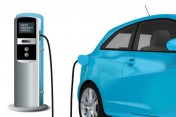 Both national building regulations and London-specific planning policy require new developments to make provision for electric vehicle charging infrastructure. The requirements have strengthened significantly in recent years as EV adoption accelerates, and are now a standard consideration for any new residential or commercial development.
Part S of the Building Regulations, which came into force in 2022, applies to all new builds and major renovations across England. It requires developers to integrate EV chargepoints into new projects, specifically, one chargepoint per dwelling for new residential buildings with 10 or more parking spaces, and one chargepoint per 20 spaces for new commercial buildings. Ducting must be provided for all remaining parking spaces to enable future installation.
These are minimum national requirements. Local planning authorities, particularly in London, may require more.
The London Plan sets additional requirements for developments in Greater London, above and beyond the national Part S baseline. The guidance distinguishes between active and passive provision:
Active parking spaces are fully wired and ready to use, a chargepoint is installed and operational from the outset.
Passive parking spaces have the necessary cabling and infrastructure in place so that a chargepoint can be added easily and cheaply in the future, without major excavation or rewiring.
The London Plan requires new developments to provide at minimum:
It is both cheaper and less disruptive to install passive infrastructure at the time of construction than to retrofit it later, making early planning for EV provision a sound long-term investment for any developer.
Planners and guidance documents typically categorise EV chargers into three types:
Standard chargers: single phase, 3–7kW. Suited to parking areas where vehicles are left for extended periods, such as residential developments and workplaces. A 7kW charger will fully recharge most EVs overnight.
Fast chargers: single phase or three phase, 7–22kW. Suited to locations where less time is spent, such as retail car parks. Can provide a meaningful charge in 1–3 hours.
Rapid chargers: DC, 50kW and above. The most common rapid chargers are now 50kW, though London is increasingly seeing ultra-rapid sites offering 150kW to 350kW+, suited to locations where quick top-ups are needed such as service stations and transport hubs.
Active EV chargers should be located in prominent positions to raise the profile of EV charging within the development and encourage uptake.
On the management side, the guidance is clear that non-EV owners should not subsidise the electricity used by EV charging through general service charges or maintenance contributions. Costs should be borne by users, with heavy users paying proportionally more than occasional users. This requires chargepoints with metering and billing capability from the outset.
We offer a range of smart, metered EV charging solutions suitable for both active installations and upgrades to passive bays. Our in-house installation team can handle both new active charging points and the conversion of passive bays to active provision as demand grows.
Our systems allow freeholders and management companies to bill users for electricity consumed, ensuring the cost of EV charging is borne by those using it — in line with planning guidance.
We work with builders, developers, architects, and specifiers to design and install the right EV charging solution for each development.
Give us a call on 0118 951 4490 or email info@spiritenergy.co.uk.