Powering Change
Installing since 2010 · 0118 951 4490 · info@spiritenergy.co.uk


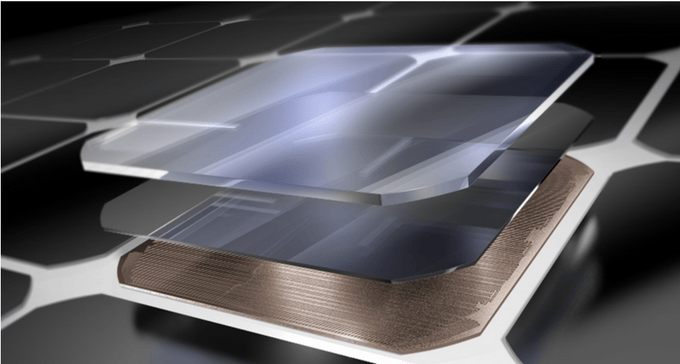
Spirit Energy installs a curated range of premium n-type solar panels — AIKO, LONGi, REC and Viridian for homes, plus higher-wattage modules from Trina, JA Solar and DMEGC for commercial roofs. As independent installers, we are not tied to any single manufacturer, so we recommend the best panel for each specific project and source it at a competitive price.
We choose every manufacturer in our range on product quality, warranty terms and the support they provide. You can be talked through your options in our video on the best solar panels, which you can watch below.
Our range varies slightly with availability, but the core of it is set out in the table below. Unless otherwise stated, all panels are n-type monocrystalline — the current market standard for efficiency and durability. For commercial installations we work with a wider range of manufacturers and can access panels at significantly larger volumes and higher wattages than our standard domestic range; if you are specifying a commercial system, get in touch and we will recommend the most suitable panels for your project and budget.
| Make | Panel | Best for | Residential/Commercial | Size | Colour | Watts* | Watts/ m2 | Warranty | Data-sheet |
| AIKO | AIKO Neostar 3 | Longest warranty & premium all-black | Residential + Commercial | 1762mm x 1132mm x 30mm | All-Black | 490W | 245W / m2 | 30 year product + 90.6% output at 25 years, 88.9% output at 30 years | Link |
| LONGi | LONGi S10 | Highest efficiency / limited roof space | Residential | 1800mm × 1134mm × 30mm | All-Black | 490W | 247W / m2 | 30 year product + 88.9% output at 30 years | Link |
| LONGi | LONGi Hi-Mo X10 | Best value & performance balance | Residential + Commercial | 1800mm × 1134mm × 30mm | All Black | 480W | 235W / m2 | 25 year product + 95% output at 10 years; 92% output at 25 years | Link |
| REC | REC Alpha Pure-RX | Low-light & cloudy UK conditions | Residential + Commercial | 1728mm x 1205mm x 30mm | All Black | 470W | 226W / m2 | 20 year product + 92% output at 25 years | Link |
| Viridian | Viridian Clearline Fusion | Integrated, in-roof look | Residential | 1722mm x 1134mm x 70mm | All Black | 445W | 228W / m2 | 10 years product + 90% output at 10 years, 80% output at 25 years | Link |
| Trina | Vertex S+ / Vertex | Commercial rooftops | Commercial | 1762mm x 1132mm x 30mm | All Black | 455W | 228 W / m2 | 15 years product + 87.4% output at 30 years | Link |
| JA Solar | DeepBlue 4.0 Pro | Commercial value | Commercial | 1762mm x 1132mm x 30mm | Black Frame | 470W | 235W / m2 | 12 years product + 87.4% output at 30 years | Link |
| DMEGC | Infinity | Large-scale, high-wattage commercial | Commercial | 2278mm x 1134mm x 30mm | Black Frame | 590W | 228W / m2 | 15 years product + 87% output at 30 years | Link |
Each panel model is produced in a series covering a range of outputs. The wattage shown is the variant we are currently selling based on market availability.
The Viridian Clearline Fusion is an in-roof panel. In-roof systems typically produce around 5% less output than on-roof equivalents due to reduced ventilation and higher operating temperatures.
In this video, the Spirit Energy team walks through how to choose the best solar panel for a UK home in 2026 — comparing efficiency, warranty terms and value across our AIKO, LONGi, REC and Viridian range, and explaining which panel suits which type of roof.
The best solar panels available in the UK are made by LONGi and AIKO. Both lead the market in n-type cell technology, consistently achieving the highest efficiencies in their class and backing their products with strong long-term warranties, which is why they sit at the top of our range.
LONGi are the world's largest solar manufacturer and invest heavily in research and development. Their Hi-MO S10 uses HPBC (Hybrid Passivated Back Contact) cell architecture to achieve market-leading efficiency, while the Hi-MO X10 offers an excellent combination of performance and value with a 25-year product warranty.
AIKO are a pioneer in ABC (All Back Contact) n-type cell technology and consistently push the boundary on cell efficiency. Their Neostar 3 achieves 245 W/m² and comes with a 30-year product warranty, longer than most competitors.
REC is a European brand with a strong reputation for quality control and warranty reliability. Their Alpha Pure-RX uses a heterojunction design for excellent low-light performance and comes with a 20-year product warranty.
With the exception of the premium manufacturers above, most solar panels on the market are assembled from cells produced in a small number of factories, and the differences between mid-range products are modest. As the technology advances rapidly, the best panels are constantly shifting — we assess each project individually and recommend the most suitable option at the best available price.
To choose the best solar panel, weigh five factors: efficiency, cost per watt, performance degradation and warranty, manufacturer strength, and colour and size. Each is explained below.
Efficiency measures how much electricity a panel generates from a given area of roof, and it matters most when roof space is limited — a higher-efficiency panel means more total output from the same number of panels. The best panels in our current range achieve 245–247 W/m², compared to around 170 W/m² for a standard polycrystalline panel.
A key development in recent years is the mainstream adoption of n-type solar cells, which now dominate the market due to their higher efficiency and significantly lower light-induced degradation compared to the older p-type standard. The table below summarises how efficiency varies across different panel technologies:
| Panel type | Module efficiency (W/m2) | Relative cost | Typical performance guarantee | Typical product guarantee | Typical colour |
| N-type monocrystalline (TOPCon/HPBC/ABC) | 235–250 | Medium–High | 88–92% | 25–30 years | All Black |
| Monocrystalline (standard) | 210–230 | Medium | 85–90% | 10–25 years | Black / Black frame |
| Heterojunction (HJT) | 220–240 | High | 92%+ | 25 years | Black cell, white backsheet |
| Polycrystalline | 165–170 | Low | 80% | 10 years | Blue cell, silver frame |
LONGi and AIKO panels represent excellent value, combining very high efficiency with strong warranties at a competitive price point. As a general rule, higher-efficiency panels can be more cost-effective overall on complex or space-constrained roofs, since they minimise the number of panels — and therefore the installation labour — required.
All of our systems are bespoke, so we can advise on and install almost any commercially available panel. If you have a specific manufacturer in mind, just ask, and if you want a comparison quote between two systems, we are happy to provide one.
All solar panels degrade slightly in output over time. The industry minimum is 80% of rated output after 25 years, but the best manufacturers now significantly exceed this. The panels in our range carry performance warranties from 80% after 25 years (Viridian, in-roof) up to 88.9% after 30 years (AIKO Neostar 3 and LONGi Hi-MO S10).
When comparing panels, pay attention to both the product warranty (how long the manufacturer covers defects) and the performance warranty (the guaranteed output over time). The rate of annual degradation is an important detail often buried in the small print: the best n-type panels now guarantee a maximum degradation of around 0.40–0.45% per year, compared to 0.55% for older monocrystalline technology — a meaningful difference over a 25–30 year lifespan.
A 25 or 30-year warranty is only as good as the company behind it. The solar industry has seen significant consolidation, and not all manufacturers will still be trading in two or three decades. We are comfortable recommending every manufacturer in our current range, and we only supply panels from companies with a strong global presence and, where possible, insurance-backed warranties.
The vast majority of panels in our range are all-black, which gives a clean, modern appearance on most roof types. Panel dimensions also matter: a panel that fits more neatly into your available roof area can deliver more total output than a technically superior panel that leaves more wasted space.
The most efficient solar panels available in 2026 are the LONGi Hi-MO S10 (247 W/m², using HPBC technology) and the AIKO Neostar 3 (245 W/m², using ABC All Back Contact n-type cells). Both represent the current state of the art in residential and commercial solar and offer a significant efficiency advantage over standard monocrystalline panels.
For context, the theoretical efficiency limit for a single-junction silicon solar cell is around 32% (equivalent to 320 W/m² at standard test conditions). In practice, commercial panels come in at 20–25%, with losses arising from surface reflection, cell interconnection and thermal effects. For more detail, see our dedicated high-efficiency solar panels page.
Tier 1 is a bankability rating created by Bloomberg New Energy Finance — a measure of whether banks are prepared to finance large projects using a manufacturer's panels. It is not a guarantee of product quality or long-term company stability.
Bloomberg defines Tier 1 manufacturers as those that have supplied own-brand, own-manufacture panels to at least six projects financed non-recourse by six different banks in the past two years, and the list is reviewed quarterly. We do not restrict our supply to Tier 1 manufacturers, but we only recommend panels from reputable companies whose products meet the requirements of each individual project.
Bifacial solar panels expose solar cells on both the front and back of the panel, capturing reflected light from the ground or roof surface as well as direct sunlight. This is not practical for standard flush on-roof or in-roof installations, but can deliver a meaningful output increase on flat-roof and ground-mount systems. Find out more in our bifacial solar panels guide.
Black (all-black) solar panels use black monocrystalline cells with a black frame and backsheet, giving a clean, uniform appearance that works particularly well on slate, dark tile and flat roofs. The majority of customers now request all-black panels, and every panel in our range above is available in an all-black finish.
AdvancedHeating-ViridianSolar%20-%20Copy%20(1).jpg?width=1400&name=3048-slate-roof-integrated-solar-pv(C)AdvancedHeating-ViridianSolar%20-%20Copy%20(1).jpg)
For in-roof installations, the Viridian Clearline Fusion is our recommended option. It is specifically designed to integrate with the roof covering, giving a flush, built-in appearance, and is most suited to new builds or properties already undergoing roof refurbishment. For on-roof installations, all-black or black-frame is our default specification across the range.
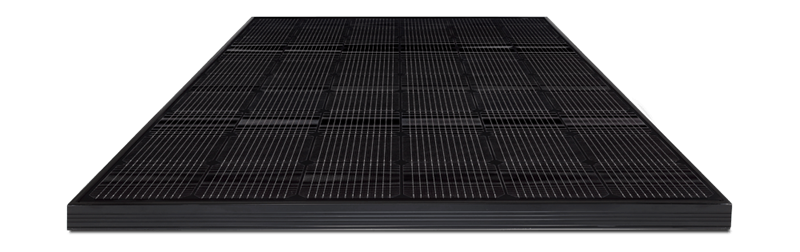
Learn more in our blog post on black solar panels.
The best solar panels in the UK in 2026 are n-type monocrystalline modules from LONGi and AIKO. Both lead their class on efficiency — the LONGi Hi-MO S10 reaches 247 W/m² and the AIKO Neostar 3 reaches 245 W/m² — and carry 30-year product warranties. The right choice for a specific project also depends on roof space, budget and appearance.
Premium panels from LONGi and AIKO are usually worth it on space-constrained or complex roofs, because higher efficiency means fewer panels and less installation labour for the same output. On simple roofs with plenty of space, a mid-range panel can be more cost-effective. As a rule, pay for efficiency when roof space is limited and for warranty strength when you plan to stay long term.
Quality solar panels last 25 to 30 years or more. The industry minimum is 80% of rated output after 25 years, but the best n-type panels now exceed this — the AIKO Neostar 3 and LONGi Hi-MO S10 guarantee 88.9% output at 30 years. Annual degradation on the best panels is around 0.40–0.45%, compared with about 0.55% for older technology.
N-type solar cells are the current market standard, having largely replaced the older p-type. N-type panels offer higher efficiency and significantly lower light-induced degradation, so they hold their output better over 25 to 30 years. Most premium panels — including LONGi, AIKO and REC models — now use n-type architectures such as TOPCon, HPBC or ABC.
For cloudy UK conditions, panels with strong low-light performance are ideal. The REC Alpha Pure-RX uses a heterojunction (HJT) design that performs well in diffuse light, while high-efficiency n-type panels from LONGi and AIKO maximise output from limited winter sunlight. All perform reliably in UK temperatures — the priority is efficiency and low-light response rather than heat tolerance.
Both are excellent and sit at the top of Spirit Energy's range. LONGi is the world's largest solar manufacturer; its Hi-MO S10 uses HPBC cells to reach 247 W/m². AIKO pioneered ABC (All Back Contact) cells; its Neostar 3 reaches 245 W/m² with a 30-year product warranty. The difference is marginal — the best choice usually comes down to price and availability at the time of quoting.